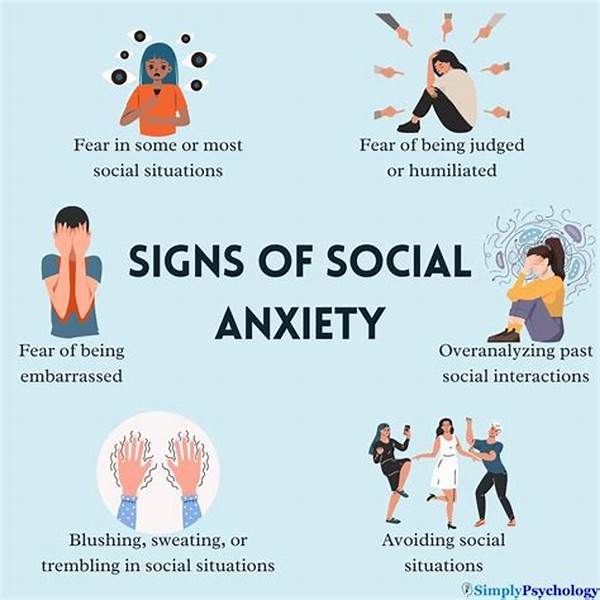
Imagine standing in a room filled with people, the noise of chatter creating an invisible wall between you and everyone else. You feel a rush of heat climbing up your neck as beads of sweat slowly form across your forehead. Your palms are moist, and your heart is pounding like a drum in a frantic parade. Welcome to the world of social anxiety, where every social interaction can feel like climbing an insurmountable mountain.
Read More : Anxiety Management Apps Popular Among Millennials
Social anxiety is a persistent fear of social situations in which one might be judged or scrutinized by others. It’s that nagging feeling that makes everyday interactions like ordering coffee or attending a meeting feel like an Olympic sport. Everyone loves a good story, so let me share the story of a friend, Sarah. Sarah was the life of her virtual party but when it came to face-to-face interactions, the idea petrified her.
One might argue, “It’s just a bit of nervousness, isn’t it?” Oh, if only it were that simple. Social anxiety is different from the occasional jitters before a big presentation. It’s a complex interplay of genetics, environment, and personal experiences. Statistically speaking, it affects around 7% of adults in the United States. And those are just the ones diagnosed, mind you.
With the digital age, world dynamics have shifted, creating a paradox. How does one navigate a world that demands both connectivity and isolation? For many, online interactions are a haven, an escape from the societal spotlight. But, as Sarah found out when she missed her best friend’s wedding because the thought of being around so many people was terrifying, real-life social structures still matter greatly.
Overcoming Social Anxiety
Sarah found solace in a rather unconventional method—improv comedy classes. “It was scary, putting myself out there. But the realization that everyone else was just as scared made it empowering,” she shared. It’s a classic case of facing fears head-on, but with a humorous twist.
Social anxiety isn’t just about being shy. It is a psychological pattern where individuals fear everyday activities, often feeling they’re being judged. Have you ever felt your throat growing tighter simply because someone asked for your opinion during a meeting? If so, you might relate. However, the spectrum of social anxiety is broad. For some, it’s about fear of public speaking; for others, it’s the mere thought of socializing with strangers or even friends.
In Sarah’s case, social anxiety manifested in various ways at different times, each more challenging than the last. From evading social gatherings to being mute in group conversations, the behavior appeared normal. But was it? No one could tell how Sarah spent hours in front of the mirror, rehearsing lines of conversation, or how she constantly replayed dialogues in her mind after meetings, critiquing herself for everything she said or didn’t say.
The Emotional and Rational Perspective on Social Anxiety
Let’s dive deeper into the realm of emotions. Most folks facing social anxiety do so because they feel inadequate, expecting judgment around every corner. Social norms, expectations, and a sprinkle of personal experiences layer up, forming an invisible cage. In a society that frequently overlooks the cries of introverts, the struggle can seem personal and overwhelming.
However, from a rational perspective, numerous studies highlight therapy as an effective remedy. Cognitive-behavioral therapy, or CBT, has shown significant promise. It teaches individuals to tackle negative thoughts and gradually ease themselves out of that paralyzing fear. Professional intervention isn’t just a recommendation, it’s a beacon of hope for many.
Innovative Approaches to Tackle Social Anxiety
Beyond professional help, self-help strategies and hobbies can work wonders. Drawing from Sarah’s story, getting involved in improv comedy pushed her boundaries but offered a safety net of laughter to fall back on. Similarly, mindfulness and deep-breathing exercises, when practiced regularly, can be transformative.
Choosing a path to combat social anxiety is personal and varied. Whether it’s painting, singing, or taking a leap into pottery—every creative endeavor holds the potential to be therapeutic. After all, social anxiety doesn’t define you, it merely challenges you to rediscover your courage in disguise.
Practical Tips to Manage Social Anxiety
As we wrap up our exploration of social anxiety, here are a few practical tips to tackle it with courage and poise:
Concluding Remarks on Social Anxiety
In conclusion, while social anxiety might pose challenges, it’s also an opportunity for self-discovery and growth. Dive into the world of creativity, seek support, and gradually, layer by layer, you’ll emerge stronger. Remember, you’re not walking this path alone—many have walked before, and countless will walk alongside you.